CATCHY · the big picture
From 20 ideas
to one design.
CATCHY combines civilian safety with interception agility. Every step narrows the options, and the tests check the numbers along the way.
Step 2 and step 5 open their own chapter · ← → to move
01 · Initial screening ● Done
Which ideas are worth a closer look?
12 designs compared in pairs on four criteria plus net expansion ratio. The result: two design families, each with leading ideas.
Conventional
Fixed wing familySimpler · non-rigid net control
- Trapezoidal H wingexpansion 6
- Tent net fixed winglift, simple
Innovative
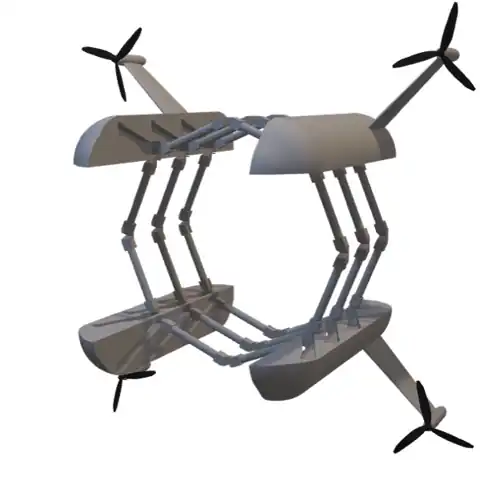
X wing familyLarger net expansion · rigid net control · more complex
- Octo-morphing X wingexpansion 12
- Hexamorphlead after screening
catchyrobotics.com · Initial Screening · Review 1
02 · Quantitative comparison ● Done
How do the families compare in numbers?
First-order hand calculations, checked with CFD. Fixed wing: least drag, lightest. Octagon frame: ~10× lower joint torque.
03 · Catching requirements Next
What does each mechanism need from the catch?
Each mechanism sets its own manoeuvre and geometry. This defines the scenario the agility simulation has to fly.
Per mechanism, we define
- Approachdirection, speed
- Relative speed at catchmatched speed
- Net orientationnose-first or broadside
- Opening time & spacebefore the catch
Already known
- Clapmust close in 40 ms
- Bar dropneeds 8.5 kg or a pull-up
- Jaw≈ 54 N on the mechanism
- Fold-out≈ 12.5 N per arm
04 · Agility simulation Next
Fixed wing or X wing: which one catches better?
Agility comes from the airframe (mass, inertia, drag, rotor layout), not from the net. So we simulate the two airframe families instead of every idea.
In · from step 2
- Mass & inertia
- Drag area CD·A
- Thrust-to-weight
Simulate · scenario from step 3
- Top speed, roll/pitch rate
- Noise & latency
- Target 1 kg, 21 m/s
Out
- Catch success rate
- Time to intercept
- Better family
05 · Tests Next
Do the numbers hold in reality?
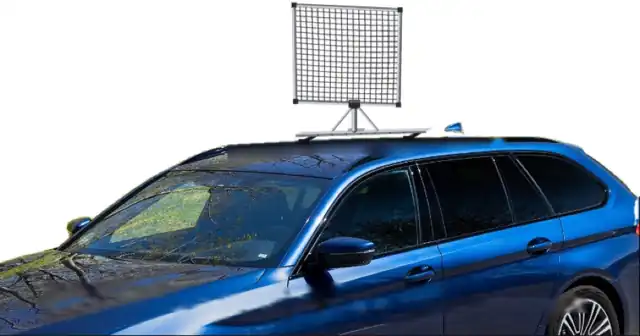
Car-mounted rig with load cells. Three tests, each feeding back into an earlier step.
Net drag
Validate the CFD→ step 2 numbersDeployment
Does it open at speed?→ step 3 mechanismsImpact
Does it hold the target?→ step 3 mechanismsMilestone 1 · end of October Decision
Choose the mechanism and the drone geometry.
Three inputs decide it, one from each strand.
And after that
Review 1 · milestones and grand vision